Project Challenges
Delivering one of Australia’s largest wind farm logistics programs required more than moving oversized components from port to site. The scale of the project, combined with shared port operations, multiple transport routes and strict delivery windows, demanded detailed planning, engineered transport solutions and close coordination across every stage of the operation.
Managing High-Volume Wind Turbine Logistics
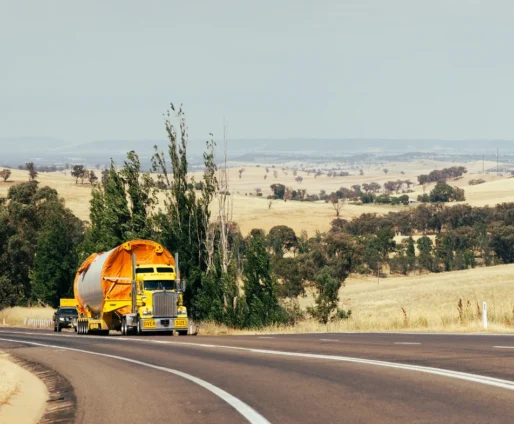
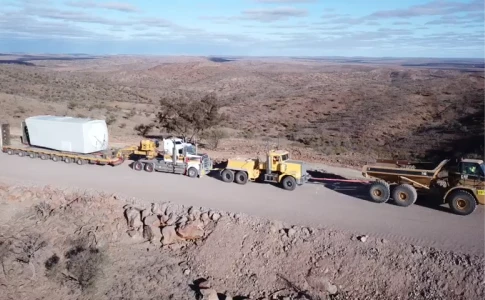
Delivering the Moorabool Wind Farm required the coordinated transport of components across both the Moorabool North and Moorabool South developments. Over the course of the project, ARES managed more than 1,400 oversized deliveries, including 520 tower sections weighing up to 101 tonnes, 312 blades measuring 68 metres, and a range of nacelles, hubs and ancillary equipment.
Maintaining a continuous delivery program at this scale demanded precise scheduling, fleet optimisation, cargo sequencing and close coordination between port operations, transport crews and site teams to ensure components arrived safely and in line with construction requirements.

Coordinating Shared Port Operations
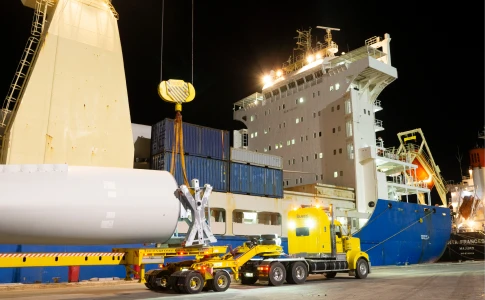
At the same time as Moorabool, another major Goldwind project was importing components through the Port of Geelong. Cargo storage, cranes, police escorts and rail crossing supervision were shared across both projects, making communication and coordination critical to maintaining delivery schedules.
Managing Multiple Transport Routes
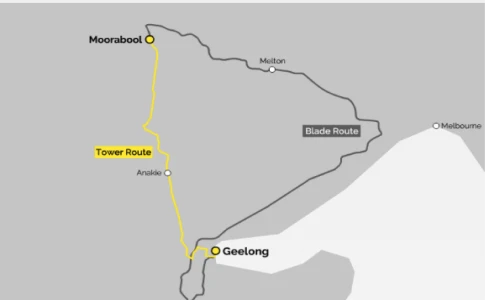
Situated only 55km away from the Port of Geelong, Moorabool was ideally located for easy transport of components. The tricky aspect was navigating out of the metro area of Geelong and getting over the Brisbane Ranges at Anakie.
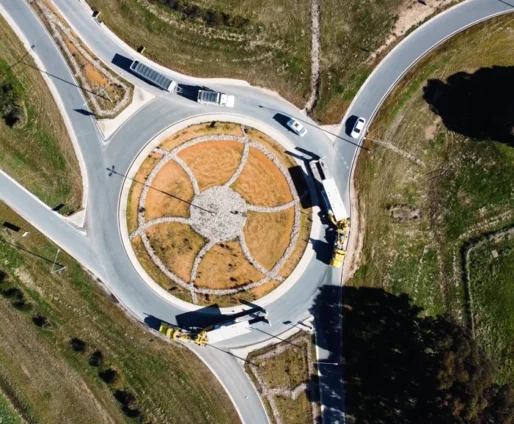
Due to their length, the blades had to take a longer route via the Princes Fwy and Melton. The tower sections and other components could take the direct route via Anakie.
Working Within Strict Curfew Windows
Oversized loads departed the Port of Geelong during limited overnight curfew windows. Trucks were scheduled in staggered departure times to minimise traffic disruption, reduce congestion at the North Geelong rail crossing and maintain a continuous flow of deliveries throughout the transport program.