

Project Challenges
From congested ports to township-tight roads, Flyers Creek threw up obstacles at every stage. Here’s what we navigated to keep delivering.
Constrained port storage
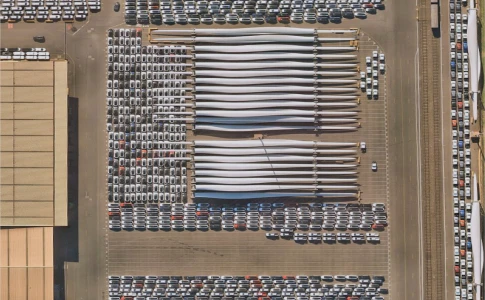
Almost 400 turbine components arrived into Port Kembla across five separate shipments, a volume that would have presented offloading challenges at any port. This was compounded by Port Kembla’s role as the primary vehicle import hub for Sydney, which was managing an unprecedented backlog of vehicle shipments at the time. With available space at a premium, accommodating the oversized wind cargo alongside the vehicle overflow required careful coordination. By working closely with terminal operator AAT and utilising overflow storage areas where possible, ARES successfully secured storage for the full consignment.
A circuitous 400km+ route
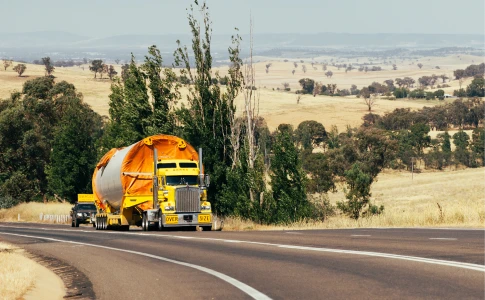
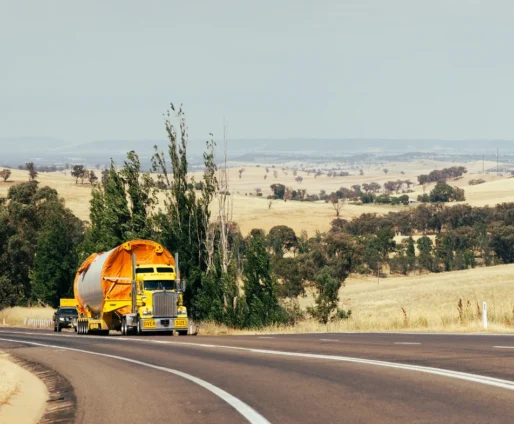
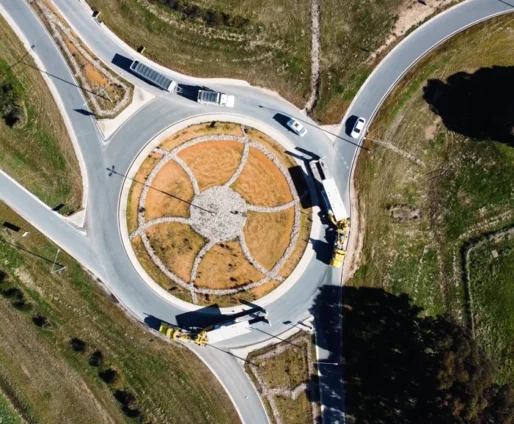
Getting from Port Kembla to site was anything but a straight line, with the entire route planned to navigate around the Blue Mountains. Loads first had to duck under the low bridges heading out of Wollongong, then join the Hume Hwy to Yass, before turning onto Lachlan Valley Way and continuing up to Cowra, finally arriving at the wind farm after a journey of more than 400km one way. Each leg demanded careful planning to accommodate the size and weight of the cargo.
Short-notice transformer transport
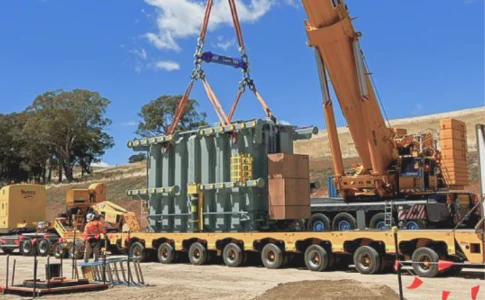
Wind turbines weren’t the only cargo on this project. The 120-ton main transformer arrived into Port Kembla in January and needed to take the same demanding route into site aboard an 8-axle platform trailer. ARES was asked to arrange this transport at very short notice, a significant undertaking for an item of this size and we ight. Rising to the challenge, we had the oversized transport permits turned around within a week, and the “trafo” was on site shortly after, ready to boost the voltage of the wind-generated electricity up to 132kV at the substation.
Offloading oversized components on site
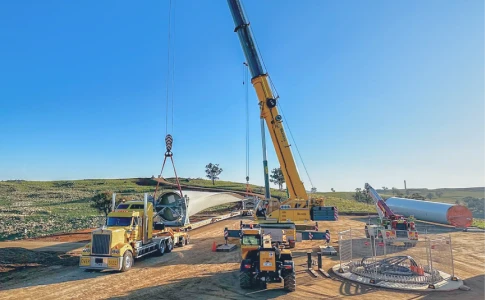
All Biala deliveries were executed and completed within 16 weeks, an average of almost two complete wind turbines per week. That run rate held despite ship discharges, the Easter long weekend and disruption due to COVID-19, and came down to the combined efficiency of the AAT port loading crews, the Ares team, the customer’s offloading crews on site, and clear communication and coordination between all parties.